



The rapid buildout of artificial intelligence (AI) infrastructure is expected to accelerate in the years ahead, with a new analysis projecting investment in the sector will top $31 trillion through 2050.
A report by PwC projects that capital expenditures on AI infrastructure will reach $31.6 trillion by 2050 as companies invest in building the computing capacity to power models, as well as upgrade the tech as it advances.
It added that the $31.6 trillion estimate represents the central scenario within a plausible range of about $22 trillion to nearly $50 trillion.
Annual investment in data centers is expected to rise from roughly $800 billion a year in 2026 to $1.8 trillion per year in 2050.
X REVEALS FOREIGN ADVERSARY BEHIND FAKE ACCOUNTS DISSEMINATING ANTI-DATA CENTER MESSAGING
“AI infrastructure is becoming one of the defining capital allocation challenges of the next generation. It cuts across technology, energy, real estate, supply chains, regulation and financing. This changes how infrastructure investors need to think about capital requirements, risk and returns,” said Clara Cutajar, global infrastructure leader at PwC Australia.
The Americas are projected to account for $16.5 trillion of the $31.6 trillion in estimated investment through 2050, with the U.S. alone accounting for about $15.1 trillion – or about 48% of the global total.
Cumulative capex in the Americas could rise to $27.1 trillion through 2050 in the upside scenario.
NEW REPORT WARNS AI DATA CENTER BOOM SQUEEZES MEMORY-CHIP SUPPLY, COULD RAISE EVERYDAY TECH COSTS

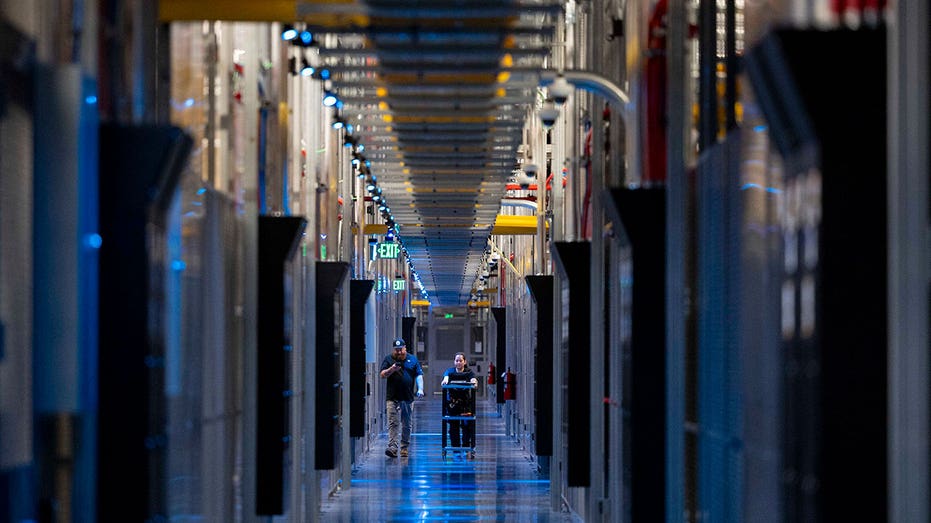
PwC wrote that the “lead in AI infrastructure is wider than in any major industrial category since postwar manufacturing. That’s because the U.S. remains central to the advanced chip ecosystem and is home to the largest AI model developers, hyperscalers, and AI-native businesses.”
“Talent, capital, and new ventures continue to cluster around that base, and facilitative state-level policy compounds the country’s lead,” it added.
The report said that of the $31.6 trillion estimate, the Asia-Pacific region would account for $8.2 trillion in cumulative capex through 2050.
China and India are the largest sources of demand, owing to their large populations, rapidly expanding digital economies, and headroom for AI to embed in business and consumer activity.
NVIDIA CEO JENSEN HUANG RIPS ‘THE BAND-AID OFF’ AS AI CHIP GIANT RESETS EXPECTATIONS
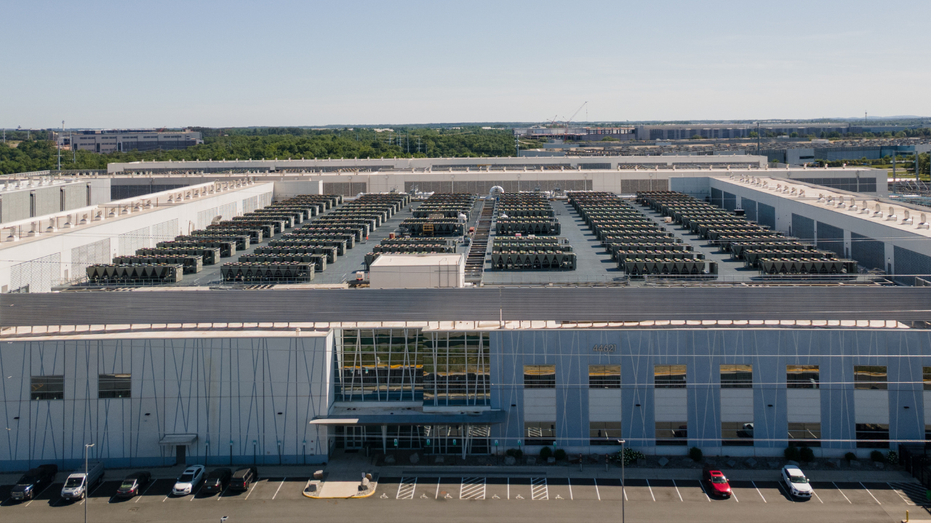
Europe’s share of the cumulative capex estimate would be $5.6 trillion through 2050, well below its proportion of global GDP, due to power constraints, planning friction and fragmented regulation across countries.
The Nordic countries were cited as a credible alternative to constrained Western European hubs, given their energy grids that are heavy on renewables and have electricity prices 40%-50% below other parts of Europe, as well as climates that reduce cooling loads.
Other regions detailed in the report include the Middle East, which would see an estimated $1.1 trillion in cumulative capex through 2050, while Africa would see $255 billion over that period.
“The AI buildout is not a rising tide that will naturally lift all boats. Capturing this investment requires active positioning. Investors should recognize data centers as hybrid assets with a complicated risk profile,” Cutajar said.
Read the full article here

